10 Best Solar Cameras for Outdoor Security?

Time:2026-09-22 Author:Mason
0%

Choosing the right Solar Camera is not simply about counting pixels or comparing prices. Outdoor security depends on sunlight, battery capacity, weather resistance, network strength, and installation conditions. A camera mounted beneath a leafy tree may receive far less energy than expected. Winter shadows can expose that weakness quickly.

Solar security consultant Dr. Peter Gevorkian often emphasizes, “Solar power rewards careful planning more than optimistic promises.” That principle fits outdoor surveillance perfectly. A reliable Solar Camera should keep recording through cloudy afternoons, temperature changes, and occasional weak signals. It should also provide practical alerts without overwhelming you with false notifications.

This guide examines ten leading solar cameras for outdoor security. Each model is considered through real-world details, including night visibility, motion detection, storage options, app performance, and mounting flexibility. Some cameras look impressive on paper. Field conditions can tell a different story.

Small details matter.

A wide solar panel may collect more energy, but its angle still matters. A sharp image may become useless when glare covers a driveway. A powerful spotlight may discourage intruders, yet disturb nearby bedrooms. These trade-offs deserve honest attention.

No camera is perfect. Even the best model may need occasional cleaning, repositioning, or firmware updates. The goal is not to promise effortless protection. It is to identify dependable choices for different homes, properties, budgets, and weather conditions, while recognizing where each Solar Camera may fall short.
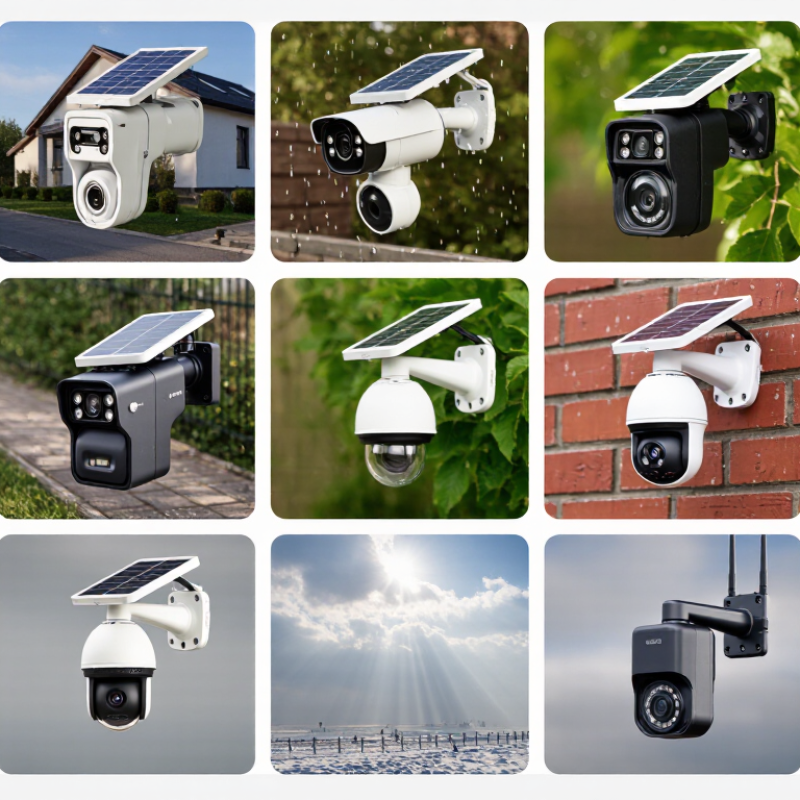
10 Best Solar Cameras for Outdoor Security?

What to Consider When Choosing an Outdoor Solar Security Camera

10 Best Solar Cameras for Outdoor Security?

What to Consider When Choosing an Outdoor Solar Security Camera

A solar security camera should match your property, not just its advertised features. Watch the sunlight first. A panel facing south may perform well, while one under a tree can struggle after several cloudy days. I learned this after placing a camera beside a covered porch. The battery drained faster than expected.

Check the camera’s viewing angle, image quality, and night performance. A wide lens can cover a driveway, but excessive width may make faces appear small. Infrared vision helps after dark, although bright walls can create glare. Motion detection should allow activity zones. Otherwise, passing cars or moving branches may trigger constant alerts.

Power storage matters. Choose a model with a battery designed for repeated charging and cold or hot conditions. Weather resistance is also important, especially around seals and charging ports. Use encrypted connections and strong account protection when remote viewing is available. Local storage can reduce dependence on an internet service, but it may require regular maintenance.

Installation affects reliability more than many buyers expect. A camera mounted too high may miss useful facial details. A loose bracket can shake footage during windy weather. Test the angle at noon and after sunset. Solar systems are convenient, but they are not maintenance-free. Dust, shade, weak Wi-Fi, and poor positioning can quietly reduce performance.

How Solar-Powered Security Cameras Work in Outdoor Environments

10 Best Solar Cameras for Outdoor Security?

How Solar-Powered Security Cameras Work in Outdoor Environments

A solar security camera combines a photovoltaic panel, rechargeable battery, image sensor, and wireless radio. The panel converts daylight into electricity, even when direct sunlight is unavailable. However, shade, dust, snow, and poor positioning reduce output. NREL’s Photovoltaic Degradation Rates report places typical module degradation near 0.5% annually. That figure matters because small panels have limited energy margins. Clouds still matter.

During daylight, the panel powers the camera and replenishes its battery. After sunset, the battery supports motion detection, recording, infrared lighting, and wireless transmission. The U.S. Department of Energy warns that rechargeable batteries generally lose usable capacity in cold conditions. Winter exposes weaknesses. A camera may work perfectly in July, then miss events during long, freezing nights.

Placement becomes an engineering decision, not a decorative choice. Mount the panel toward the strongest daily sunlight, away from roof edges and tree shadows. Keep the lens clear of rain streaks and drifting leaves. A practical field check is simple: review battery levels after several cloudy days. If the charge keeps falling, the system is undersized or poorly positioned. IEA PVPS recorded 456 gigawatts of new solar capacity globally in 2023, yet household systems still depend heavily on local weather. That is the uncomfortable detail: solar power is clean, but never perfectly predictable.

10 Best Solar Cameras for Outdoor Security? - How Solar-Powered Security Cameras Work in Outdoor Environments
Rank Solar Camera Profile Best Outdoor Use Video Resolution Night Vision Detection Method Weather Protection Typical Solar Panel Output Battery Capacity Range Connectivity Storage Options Key Selection Advantage
1 Long-Distance Perimeter Camera Large yards, fields, and rural boundaries 4K UHD Up to 30 m with infrared illumination Passive infrared motion sensor and video analytics IP66, dust-tight and protected against powerful water jets 5 W to 10 W 10,000 mAh to 20,000 mAh 4G LTE or Wi-Fi, depending on installation distance Encrypted cloud storage and optional microSD storage High image detail and extended coverage for areas without mains power
2 Wide-Angle Driveway Camera Driveways, entrances, and vehicle gates 2K QHD Up to 25 m with infrared illumination PIR motion detection with person and vehicle filtering IP65, protected against dust and low-pressure water jets 3 W to 6 W 8,000 mAh to 12,000 mAh 2.4 GHz Wi-Fi Local microSD storage and optional cloud backup Wide viewing angle helps reduce blind spots around approaching vehicles
3 Low-Light Color Camera Porches, patios, and frequently used walkways 2K QHD Color night vision with a low-light sensor; infrared backup PIR sensor and software-based motion zones IP65 3 W to 5 W 8,000 mAh to 15,000 mAh 2.4 GHz Wi-Fi microSD card and encrypted cloud storage Color footage can make clothing, vehicles, and objects easier to identify at night
4 Pan-and-Tilt Solar Camera Open gardens, courtyards, and broad outdoor areas 2K QHD Up to 20 m with infrared illumination PIR detection with remote pan-and-tilt control IP65 4 W to 8 W 10,000 mAh to 15,000 mAh 2.4 GHz Wi-Fi or 4G LTE microSD storage and optional cloud recording One mounting point can monitor multiple viewing directions
5 Compact Balcony Camera Apartments, balconies, sheds, and small outdoor spaces 1080p Full HD Up to 15 m with infrared illumination PIR motion sensor IP65 2 W to 3 W 5,000 mAh to 10,000 mAh 2.4 GHz Wi-Fi microSD storage or cloud storage Lower power consumption and a smaller solar panel suit space-limited installations
6 Cold-Climate Solar Camera Mountain areas and regions with freezing winters 2K QHD Up to 25 m with infrared illumination PIR detection with adjustable sensitivity IP66 5 W to 10 W 12,000 mAh to 20,000 mAh 4G LTE or Wi-Fi Local microSD storage and cloud backup Higher battery reserve supports operation during short periods of snow or weak sunlight
7 Hot and Humid Climate Camera Coastal regions, farms, and tropical outdoor sites 1080p Full HD or 2K QHD Up to 20 m with infrared illumination PIR detection and humidity-resistant motion hardware IP66 with corrosion-resistant mounting hardware recommended 4 W to 8 W 10,000 mAh to 20,000 mAh 4G LTE or 2.4 GHz Wi-Fi microSD storage and optional cloud storage Sealed housing and corrosion-resistant materials improve long-term outdoor reliability
8 Cellular Farm and Construction Camera Remote sites without broadband or mains electricity 1080p Full HD Up to 25 m with infrared illumination PIR sensor with person, vehicle, and animal alerts IP66 5 W to 10 W 15,000 mAh to 30,000 mAh 4G LTE with a mobile data plan Local microSD storage plus event-based cloud uploads Cellular connectivity allows remote monitoring where Wi-Fi is unavailable
9 Solar Floodlight Security Camera Back doors, garages, loading areas, and dark passages 2K QHD Full-color night vision with integrated LED floodlight PIR detection with configurable activity zones IP65 5 W to 8 W 8,000 mAh to 15,000 mAh 2.4 GHz Wi-Fi microSD storage and optional cloud storage Combines surveillance, deterrent lighting, and motion-triggered illumination
10 Privacy-Focused Local-Storage Camera Residential yards where minimizing cloud use is important 2K QHD Up to 20 m with infrared illumination PIR sensor with customizable detection zones IP65 3 W to 6 W 10,000 mAh to 20,000 mAh 2.4 GHz Wi-Fi or local network connection Encrypted microSD storage or network-attached storage Local recording can reduce dependence on subscriptions and continuous internet access

Key Features of the 10 Best Solar Cameras for Outdoor Security

Outdoor solar cameras need more than a small panel and a sharp lens. A dependable model should pair efficient solar charging with a strong rechargeable battery. This matters during cloudy weeks or shaded afternoons. Look for a panel with adjustable positioning. Even a few degrees can improve daily energy collection.

Image quality should remain clear at dawn, dusk, and night. Full-color night vision helps identify clothing and movement details. Infrared support is useful when visible lighting is unavailable. Motion detection should distinguish people, vehicles, and animals. Otherwise, swaying branches may trigger constant alerts. Two-way audio adds practical value for speaking with visitors from a phone. Keep the microphone sensitive, but not overly sensitive.

Storage choices also deserve careful attention. Local storage can reduce subscription costs and improve access during internet outages. Encrypted cloud storage offers easier remote viewing and backup protection. Check the camera’s weather resistance, operating temperature, and mounting strength. A loose bracket can ruin an otherwise excellent installation. Cellular connectivity may suit remote gates, while Wi-Fi works better near a stable router. Test signal strength at the exact mounting point. No setup is perfect. Solar charging can weaken under leaves, dust, or winter shadows, so occasional cleaning and battery checks remain necessary.

Comparing Camera Types, Power Systems, Storage, and Smart Alerts

Outdoor solar cameras differ more than their panels suggest. Fixed cameras suit gates and driveways, while pan-and-tilt models cover wider yards. Wide-angle lenses reduce blind spots, but distant faces may appear smaller. I have found that mounting height matters as much as resolution. A camera placed too high can miss useful details.

Power systems deserve close attention. A larger panel helps during short winter days, but shade still reduces charging. Battery capacity should match motion activity, recording length, and local weather. Continuous recording consumes far more power than event-based recording. This trade-off is easy to underestimate. Cloud storage offers convenient access, while local memory can reduce recurring costs. Local storage still needs protection from heat, moisture, and theft.

Smart alerts should distinguish people, vehicles, animals, and general movement. Accurate detection reduces unnecessary notifications at night. However, even strong systems can misread shadows or waving branches. Test alerts during daylight and darkness.

Tips: Aim the panel toward the strongest available sunlight. Check battery levels after several cloudy days. Use activity zones near paths, not busy trees. Review storage settings before installation, because high-resolution clips fill space quickly. Keep firmware updated, but do not assume every update improves detection. Test the camera from the viewer’s height. That practical check often reveals blind spots.

How to Install, Maintain, and Use a Solar Security Camera Effectively

Solar cameras can protect outdoor areas without trenching power cables, but installation quality determines their reliability. Mount the camera where its panel receives direct sunlight for several hours daily. Avoid eaves, tree branches, and reflective walls. The U.S. Department of Energy notes that shading can sharply reduce photovoltaic output, even when only part of a panel is covered. A south-facing position often helps in the Northern Hemisphere, but local roof angles and seasonal shadows matter more.

Keep the lens about 2.5 to 3 meters above ground. Aim it toward entrances, gates, or driveways, rather than bright windows. Secure the bracket tightly, then check the live image at night. Infrared glare can appear when the camera faces a pale wall. That detail is easy to miss. Enable motion zones and reduce sensitivity near moving leaves. Excessive alerts will make useful warnings easier to ignore.

Maintenance is simple, not effortless. Wipe dust and bird residue from the panel with a soft, damp cloth every few months. Inspect cable seals after storms. Rechargeable batteries lose capacity over time, especially in cold weather. The National Renewable Energy Laboratory reports a median photovoltaic degradation rate near 0.5% annually, but camera batteries can age faster. Check storage, firmware, and notification settings monthly. The Solar Energy Industries Association reports that U.S. solar capacity has expanded dramatically, yet sunlight remains seasonal. A cloudy week can expose poor planning. Add a larger panel or auxiliary battery only after measuring real energy use.

FAQS

What should I check before choosing an outdoor solar security camera?

Check sunlight, viewing angle, night vision, battery capacity, weather resistance, storage, and alert controls. Property conditions matter more than advertised features.

Where should I install the solar panel?

Choose a position with several hours of direct sunlight daily. Avoid trees, roof overhangs, and nearby walls that cast shadows or reflect light.

Does a wider viewing angle always provide better security?

Not always. A wide lens covers more ground, but distant faces may appear smaller. Test the image from the viewer’s height.

How high should the camera be mounted?

About 2.5 to 3 meters above the ground is often practical. Mounting too high can hide useful facial details.

How can I reduce unnecessary motion alerts?

Create activity zones near entrances, paths, or driveways. Reduce sensitivity near trees, roads, and bright moving shadows.

Is continuous recording suitable for every solar camera?

No. Continuous recording uses much more power than event-based recording. Battery life may fall quickly during busy days.

Should I choose cloud storage or local storage?

Cloud storage offers convenient remote access. Local storage can reduce recurring costs, but it needs protection, maintenance, and enough capacity.

How can I maintain a solar security camera?

Wipe dust and bird residue from the panel every few months. Inspect seals after storms, and check battery, storage, firmware, and alerts monthly.

Can weather affect solar camera performance?

Yes. Shade, cloudy weeks, heat, and cold can reduce charging or battery capacity. Measure real energy use before adding another panel or battery.

What security settings should I use for remote viewing?

Use encrypted connections and strong account protection. Keep software updated, but review detection afterward because improvements are not guaranteed.

Conclusion

Choosing the right Solar Camera for outdoor security requires more than checking image quality. This guide explains how to evaluate weather resistance, night vision, motion detection, viewing angles, battery capacity, and solar charging efficiency. It also explores how solar-powered cameras operate in changing outdoor conditions, including cloudy weather, seasonal sunlight, and areas with limited exposure. Readers will learn how different camera designs, power systems, storage options, and smart alerts affect reliability, convenience, and overall monitoring performance.

The article also introduces the key features to look for in ten leading types of outdoor solar security cameras without focusing on specific brands. It compares local and cloud storage, wired and wireless setups, continuous recording and event-based monitoring, as well as alert customization. Finally, it provides practical guidance for installation, panel positioning, battery care, software updates, and routine maintenance, helping users create a dependable outdoor security system and use their Solar Camera effectively over time.


Mason

Mason

Mason is a seasoned marketing professional with a deep expertise in the company's offerings and a passion for driving brand awareness. With a strong background in digital marketing strategies, he has an innate ability to connect with diverse audiences and effectively communicate product benefits.......