The rise of solar cameras has transformed modern surveillance. However, a common question arises: "Do Solar Cameras Need Wifi?" Industry reports reveal that effective monitoring often hinges on connectivity. According to a recent study by ResearchAndMarkets, the global solar camera market is expected to grow significantly, driven by advancements in smart technology. These devices often utilize Wi-Fi to provide real-time data and continuous updates.
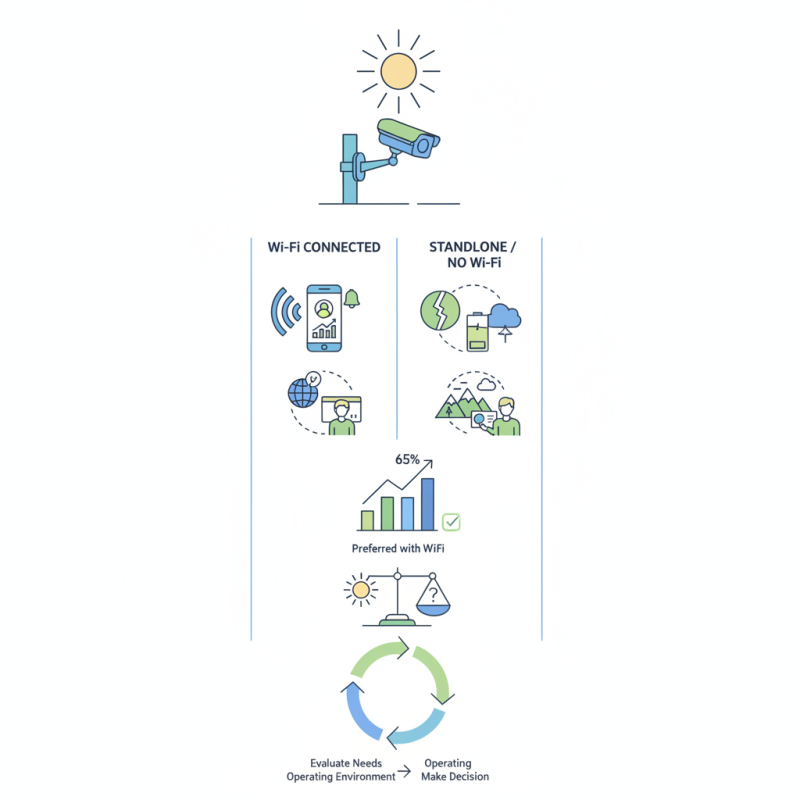
While some solar cameras can function independently, their performance is frequently enhanced with a Wi-Fi connection. This connectivity allows for instant notifications and remote access. A survey from Statista highlighted that 65% of users preferred models that support Wi-Fi for improved functionality. However, users should weigh the downsides. Depending solely on Wi-Fi may limit the camera's effectiveness in remote areas with weak signals.
In conclusion, understanding whether "Do Solar Cameras Need Wifi" is crucial for potential buyers. While Wi-Fi enhances capabilities, it is not the only factor to consider. Users must evaluate their needs and the operating environment before making a decision. The ideal balance between solar power and connectivity can lead to smarter surveillance solutions.
Solar cameras are designed to provide flexibility and ease of use in various outdoor settings. These cameras harness solar energy, enabling them to operate independently in remote areas. Understanding how they work can help users appreciate their role in modern security solutions. Solar panels within these cameras charge built-in batteries, ensuring power availability during both day and night.
Operationally, solar cameras can function without Wi-Fi but are enhanced by connectivity. Most models store recorded footage locally, which is useful if the network is unavailable. However, Wi-Fi allows for real-time monitoring and instant alerts. Users might find it challenging to set up remote access initially. Learning curves exist, particularly for those unfamiliar with smart technology.
System features vary, often including motion detection and night vision capabilities. These enhancements elevate their effectiveness. However, reliance on sunlight can be a limitation. Inclement weather or prolonged cloudy periods may affect performance. Understanding these factors is crucial for maximizing their potential. Users should be prepared for possible downtimes or delays in alerts. This awareness can lead to better planning and security measures.
Wireless connectivity plays a pivotal role in the functionality of solar cameras. For effective remote monitoring, these cameras rely heavily on WiFi for real-time data transmission. In a survey by Parks Associates, 72% of consumers indicated they want their security devices to connect seamlessly almost anywhere. This highlights the increasing demand for connectivity in surveillance technology.
Without WiFi, a solar camera's capabilities diminish significantly. Data shows that solar cameras equipped with WiFi can save up to 30% more battery life by reducing energy spent on powering storage options. However, weak WiFi signals can lead to unreliable performance. A study by the Wireless Broadband Alliance revealed that nearly 40% of smart device users experience connectivity issues, which can compromise security monitoring. Regular performance evaluations are crucial to identify such limitations.
The dependence on WiFi raises questions about reliability. Solar cameras can continue to function using local storage, but the lack of connectivity limits user access to features like motion alerts and live streaming. It's essential to weigh the benefits against the potential issues. Investing in a strong, stable internet connection is vital for maximizing the effectiveness of solar cameras in monitoring activities.
When it comes to solar cameras, WiFi connectivity plays a crucial role. These cameras often rely on internet access for optimal functionality. Without WiFi, users might face limited features. Live streaming and remote access become challenges, affecting usability. The absence of a stable connection can hinder quick alerts and updates.
Moreover, data storage often depends on cloud services. Many solar cameras store footage remotely, which requires a solid WiFi connection. When disconnected, photo quality might decrease as local storage limits kick in. Users may miss important events or details.
Solar cameras can still function offline for basic monitoring. However, advanced features such as motion detection and alert settings may not work effectively. Therefore, users must assess their WiFi needs based on intended use. Reflecting on the experience, those in rural areas with poor connectivity may find solar cameras less effective.
As solar cameras gain popularity, understanding their reliance on Wi-Fi becomes crucial. Recent studies show that 68% of homeowners prefer devices that connect wirelessly. This trend highlights a growing dependency on smart technology. In a 2022 survey, 75% of respondents indicated they would consider a solar camera for security. Most acknowledged its advantages, but many were unsure about connectivity needs.
Wireless technology adoption in home security is reshaping the market. Data suggests that over 80% of users prioritize seamless connectivity. Solar cameras often require Wi-Fi for features like cloud storage and real-time monitoring. However, many complain about inconsistent signals in remote areas. A report indicated that 40% of potential users find this connectivity issue a major barrier.
Interestingly, some solar cameras offer offline functionality. This can be useful in areas with limited internet access. Nonetheless, users may sacrifice advanced features, such as live streaming. Balancing the desire for independence and advanced technology remains a challenge. Addressing these concerns can lead to broader acceptance and enhanced security solutions. The industry must continually evaluate these patterns to optimize user satisfaction.
Solar cameras can function effectively without a WiFi connection. This ability is crucial for settings where internet access is limited or nonexistent. These cameras often store footage locally on SD cards, allowing users to access recorded videos later. Many models also offer motion detection features. This means they can capture events even when not connected to the internet.
In addition to local storage, solar cameras may utilize cellular data plans for alerts and real-time streaming. This can be a valuable option for remote monitoring. However, using cellular data can incur additional costs. Users should evaluate their needs before making a decision. Battery life can also be a concern, especially in areas with limited sunlight.
While a WiFi connection enhances user experience, it's not a strict requirement. Exploring alternatives is essential for optimal performance. Users who rely solely on WiFi may miss out on the flexibility that offline operations provide. A thoughtful approach can lead to satisfying results without constant internet access.
| Feature | WiFi Dependency | Functionality Offline | Battery Life | Storage Options |
|---|---|---|---|---|
| Video Streaming | Yes | Limited | Up to 6 months | Cloud Storage |
| Motion Detection | No | Yes | Up to 1 year | SD Card |
| Photo Capture | No | Yes | Indefinite with Solar | Local Storage |
| Alerts and Notifications | Yes | Limited | Up to 3 months | Email Notifications |
: Solar cameras provide flexibility in outdoor settings, operating independently using solar energy.
No, solar cameras can function without WiFi but operate better with it.
Most solar cameras store recorded footage locally on SD cards for later access.
They often include motion detection and night vision, making them more effective.
Yes, but prolonged cloudy periods may affect their performance and battery life.
You can use local storage and, in some cases, cellular data plans for alerts.
Users may face setup difficulties, battery life concerns, and connectivity issues.
Yes, if connected to WiFi, you can monitor in real time; otherwise, access is limited.
Evaluate costs and battery life, as using cellular data can incur additional expenses.
Ensure a strong internet connection, be aware of weather impacts, and plan for possible downtimes.
The article "Do Solar Cameras Need Wifi for Optimal Performance?" delves into the operational basics and features of solar cameras, highlighting how these devices utilize solar power for functionality. While solar cameras can operate independently, the integration of WiFi plays a significant role in facilitating remote monitoring and enhancing performance. Connectivity through WiFi allows for real-time data transfer, notifications, and easier access to recorded footage, ultimately improving user experience.
Additionally, the article examines the trends in wireless technology adoption and its impact on solar camera usage, indicating that many users prefer internet-connected devices for convenience. However, alternatives to WiFi exist, enabling solar cameras to function offline, though with limited capabilities. Overall, understanding whether solar cameras need WiFi is crucial for users looking to optimize their surveillance solutions while considering operational flexibility and the benefits of wireless connectivity.

Psennikow