As technology advances, the need for effective security solutions becomes crucial. This leads many to question, "Are Solar Cameras Reliable?" Solar-powered cameras offer a unique alternative, harnessing renewable energy for surveillance. This can reduce electricity costs and increase deployment flexibility.
However, reliability is not guaranteed. Solar cameras depend on sunlight and battery life. In cloudy or rainy regions, performance may decline. People should consider various factors before investing.
Many users report mixed experiences. Some find solar cameras effective in monitoring, while others face challenges with connectivity. Technical support varies, adding to the uncertainty of reliability. Overall, understanding both benefits and limitations is key to making an informed decision.
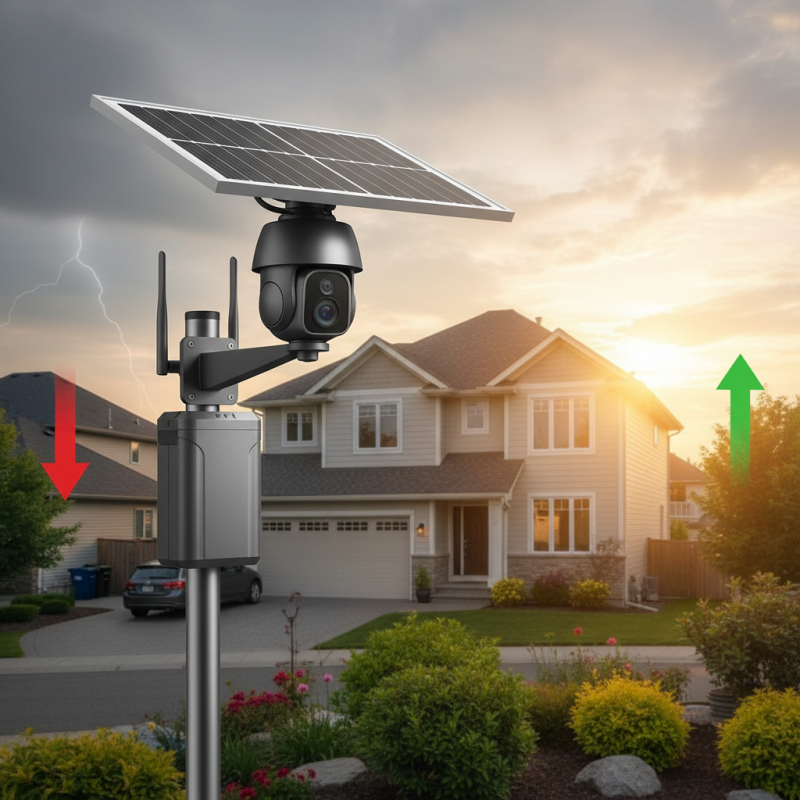
Solar cameras are emerging as a reliable choice for enhancing security systems. These cameras utilize sunlight to power their operations, making them eco-friendly and energy-efficient. They are especially useful in remote areas where traditional power sources may be unavailable. This unique feature allows them to operate continuously, providing consistent surveillance.
One advantage of solar cameras is their ease of installation. Without the need for extensive wiring or access to electricity, they can be set up quickly. This flexibility allows homeowners to install them in various locations, ensuring broad coverage. The quality of video footage is often impressive, even under varying weather conditions. However, some users may find performance dips during prolonged cloudy periods.
As with any technology, solar cameras are not without their challenges. Battery life and storage capacity can impact their reliability. It's essential to consider these factors when evaluating your security needs. Additionally, while these cameras can reduce energy costs, the initial investment might be higher than traditional models. Despite these drawbacks, solar cameras present a modern solution for those pursuing effective and sustainable security options.
| Feature | Solar Camera | Traditional Camera |
|---|---|---|
| Power Source | Solar-powered, eco-friendly | Electricity-dependent |
| Installation | Easy and flexible | Requires wiring and power access |
| Maintenance | Low maintenance, no batteries | Regular battery replacements needed |
| Cost | Cost-effective in long-term | Higher ongoing electricity costs |
| Dependability | Reliable in remote areas | Dependent on power supply |
| Weather Resistance | Designed for outdoor use | Outdoor models available, but less efficient |
: Solar cameras use sunlight to power their operations. They are eco-friendly and energy-efficient.
Solar cameras can be installed in various locations. They are especially useful in remote areas without electricity access.
The video quality is often impressive. However, performance may dip during prolonged cloudy periods.
Solar cameras depend on sunlight. Performance can be compromised during cloudy weather or winter months.
Battery quality impacts lifespan and effectiveness. Poor batteries may require frequent replacement, causing unexpected costs.
Yes, strategic placement is crucial for solar exposure. However, it may limit ideal security coverage locations.
Solar cameras harness solar energy, which can reduce energy costs. Initial investments might be higher than traditional cameras.
Yes, maintenance may increase in heavily trafficked areas. Users must be prepared for potential upkeep.
They offer a modern solution but come with challenges. Understanding limitations is essential for effective use.
They often show reduced suspicious activity. However, careful planning is still needed for successful installations.
In exploring the question, "Are Solar Cameras Reliable for Your Security Needs?", the article highlights both the advantages and limitations of solar-powered surveillance systems. Solar cameras provide sustainability, lower energy costs, and ease of installation, making them an appealing choice for various environments. However, challenges such as weather dependency and potential performance issues in extreme conditions are critical to consider.
The comparison between solar cameras and traditional security cameras reveals that while solar options offer versatility and energy efficiency, traditional models may deliver consistent performance and reliability under diverse conditions. The article also emphasizes best practices for installation to maximize effectiveness and features real-life case studies that illustrate the practical applications of solar cameras in enhancing security. By weighing these factors, users can make informed decisions about the reliability of solar cameras in meeting their security needs.

 Psennikow