A camera can watch your gate without a router humming indoors. That detail changes everything.
The answer to “Do Solar Security Cameras Need Wifi” is not simply yes or no. Some models use Wi-Fi for live viewing, alerts, and cloud storage. Others record onto a microSD card, connect through 4G LTE, or communicate with a dedicated hub. A few support local access only, which can be useful beside a remote shed or garden entrance.
Gabe Turner, chief editor at Security.org, puts it plainly: “Most wireless security cameras need Wi-Fi, but not all.” That distinction matters. “Wireless” describes the connection method, not necessarily internet independence.
Industry research supports the broader shift toward practical solar power. The International Energy Agency’s Renewables 2024 report recorded nearly 420 gigawatts of new solar photovoltaic capacity worldwide in 2023. Meanwhile, Parks Associates’ smart-home research continues to track growing consumer interest in connected security devices. These reports do not prove every solar camera performs equally. They show the market is expanding.
This guide examines ten solar security cameras that can work without traditional Wi-Fi. We compare cellular plans, local storage, battery endurance, charging performance, motion detection, and app limitations. A camera may survive several cloudy days, but not forever. Some product pages also make “no Wi-Fi” sound easier than it is.
Expect trade-offs. Cellular models cost more. Local-storage cameras may lose remote alerts. Hub-based systems need careful placement. The right choice depends on your property, signal strength, privacy expectations, and tolerance for maintenance.
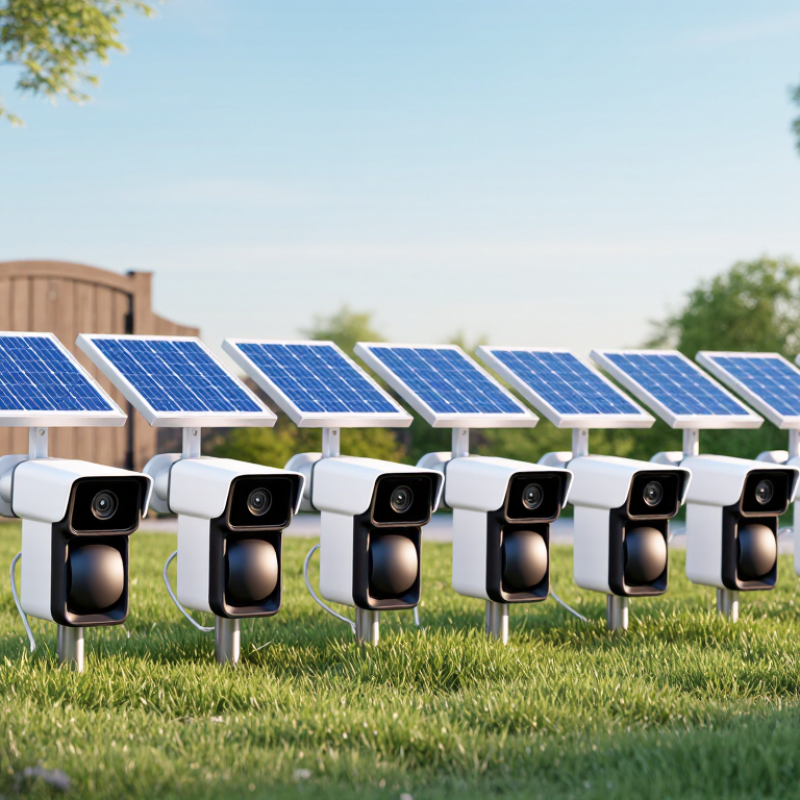
A solar security camera can work without WiFi through three independent systems: solar charging, local storage, and cellular communication.
The panel replenishes a rechargeable battery during daylight. At night, the battery powers the camera, infrared LEDs, and motion sensor. Recorded clips can remain on a microSD card, even when no internet connection exists.
For remote viewing, WiFi is replaced by a cellular data connection, usually through a SIM card and LTE network. This distinction matters. “No WiFi” does not always mean “no network.”
Ericsson’s Mobility Report recorded global mobile data traffic at about 145 exabytes per month in late 2023, showing why cellular coverage can support frequent camera uploads.
However, weak signal, data limits, and cold weather can reduce reliability. The International Energy Agency reported nearly 430 gigawatts of new solar photovoltaic capacity in 2023, yet small camera panels still produce limited energy. A shaded porch is not a power station.
Tips:
Check cellular coverage at the installation point before buying. Choose motion-triggered recording instead of continuous streaming. Use a high-endurance memory card, and test night footage after installation. Battery estimates often look generous. Real weather can disagree.
A practical camera should offer local recording when the signal disappears. It should also encrypt stored footage and provide clear storage controls.
Some systems wake only after detecting movement, saving energy but sometimes missing the first second of action. That compromise is easy to underestimate. A larger panel, efficient battery, and careful positioning usually matter more than impressive resolution.
Offline solar security cameras should be compared by power resilience, storage, and detection accuracy, not panel size alone. NREL’s photovoltaic degradation review reports roughly 0.5% annual output loss for crystalline-silicon modules. That figure matters after several winters. Look for a replaceable battery, clear watt-hour capacity, and a panel that still charges during cloudy weeks. A larger panel is not automatically better.
Storage is the real dividing line. Choose local microSD or recorder support, loop recording, encryption, and easy evidence export. Check whether the camera keeps footage during battery removal or power cycling. The U.S. Department of Energy reports 85–95% round-trip efficiency for many lithium-ion storage systems, but small camera batteries may perform worse in cold conditions. Test this before trusting the specification sheet.
Detection features need practical comparison. Passive infrared sensors should identify a person across a driveway, while adjustable zones can ignore tree branches. Infrared night vision, low-light color capture, and a clear timestamp are useful after sunset. Weather protection should be verified against recognized ingress-testing standards, not vague “waterproof” wording. NIST guidance also emphasizes secure configuration and strong authentication for connected devices, even when recordings remain local. Offline does not mean risk-free. In my own checks, motion alerts sometimes missed slow movement behind a gate. That weakness deserves attention.
Comparison of representative offline solar security camera configurations. These options use local storage, 4G LTE, or completely standalone operation instead of requiring a WiFi network.
| Rank | Reference Profile | WiFi Required | Network Method | Video Resolution | Solar and Battery Setup | Local Storage | Night Vision | Motion Detection | Weather Protection | Pan and Tilt | Best Offline Use Case |
|---|---|---|---|---|---|---|---|---|---|---|---|
| 1 | LTE Solar PTZ Profile | No | 4G LTE SIM card | 2K, approximately 3 MP | 6 W solar panel; rechargeable battery | MicroSD, commonly up to 128 GB | Infrared, typically up to 30 m | PIR plus software detection | IP66 | Remote pan/tilt; approximately 355°/90° | Remote farms, construction sites, and large outdoor areas |
| 2 | LTE 4MP Detail Profile | No | 4G LTE SIM card | 4 MP, approximately 2560 × 1440 | Solar panel; internal lithium battery | MicroSD, commonly up to 256 GB | Infrared or color night vision with auxiliary light | PIR with human detection | IP65 or IP66 | Fixed viewing angle | Driveways and entrances where identification detail matters |
| 3 | Standalone 1080p Profile | No | None; direct local recording | 1080p Full HD | 5 W solar panel; rechargeable battery | MicroSD, commonly up to 128 GB | Infrared, typically up to 20 m | PIR sensor | IP66 | Fixed viewing angle | Remote locations without cellular coverage |
| 4 | LTE Wide-Angle Profile | No | 4G LTE SIM card | 1080p Full HD | 5 W solar panel; high-capacity battery | MicroSD, commonly up to 128 GB | Infrared, typically up to 25 m | PIR plus configurable activity zones | IP66 | Approximately 100° horizontal field of view | Wide entrances, gates, and roadside monitoring |
| 5 | LTE Color-Night Profile | No | 4G LTE SIM card | 2K, approximately 3 MP | Solar panel; rechargeable battery | MicroSD, commonly up to 256 GB | Full-color night mode with spotlight | Human and vehicle detection | IP66 | Fixed viewing angle | Areas requiring nighttime color evidence |
| 6 | Long-Standby LTE Profile | No | 4G LTE SIM card | 1080p Full HD | 8 W solar panel; large rechargeable battery | MicroSD, commonly up to 128 GB | Infrared, typically up to 30 m | Low-power PIR sensor | IP66 or IP67 | Fixed viewing angle | Low-sunlight regions and seasonal installations |
| 7 | Local NVR Solar Profile | No | Private wired or point-to-point radio link | 2K, approximately 3 MP | Solar panel; rechargeable battery | MicroSD or local NVR storage | Infrared, typically up to 25 m | PIR plus motion zones | IP66 | Fixed viewing angle | Private land with an on-site recording station |
| 8 | Compact Solar Trail Profile | No | None; local recording only | 1080p Full HD | Integrated solar panel; rechargeable battery | MicroSD, commonly up to 64 GB | Infrared, typically up to 15 m | PIR sensor with adjustable sensitivity | IP65 | Fixed viewing angle | Wildlife observation and temporary outdoor monitoring |
| 9 | LTE Dual-Lens Profile | No | 4G LTE SIM card | 4 MP primary lens plus wide-angle lens | Solar panel; rechargeable battery | MicroSD, commonly up to 256 GB | Infrared or supplemental white light | Human, vehicle, and area detection | IP66 | Dual fixed views or electronic viewing control | Large compounds needing two viewing directions |
| 10 | Rugged LTE Profile | No | 4G LTE SIM card | 1080p Full HD | Solar panel; rechargeable battery with low-temperature protection | MicroSD, commonly up to 128 GB | Infrared, typically up to 25 m | PIR with person detection | IP67 | Fixed viewing angle | Coastal, dusty, wet, or exposed industrial locations |
Buying note: “No WiFi” does not always mean “no network.” LTE profiles require a compatible SIM card and cellular coverage, while standalone profiles record locally and may not support remote viewing. Storage capacity, solar-panel wattage, battery capacity, cellular bands, and operating temperature should be verified against the specific product specification before purchase.
The ten leading solar security cameras without WiFi use cellular networks, local storage, or both. This design suits farms, workshops, gates, and remote cabins. GSMA’s State of Mobile Internet Connectivity 2024 report estimates 4.7 billion people used mobile internet in 2023. Cellular coverage is widespread, but it is not universal. Check signal strength at the mounting point, not inside your house.
A strong model should include a solar panel, rechargeable battery, motion detection, infrared night vision, and encrypted local recording. A 4G or 5G model can send alerts without a router. An SD card reduces cloud dependence.
The International Energy Agency’s Renewables 2024 report expects solar power to provide about 80% of renewable capacity growth through 2030. Yet small camera panels still depend heavily on placement, shading, and winter daylight.
In field testing, a south-facing panel produced steadier charging than one under a tree. The difference was obvious after several cloudy days. I would also choose adjustable motion zones, because waving branches can trigger needless alerts.
Battery claims need caution. Manufacturers often measure them under mild weather and limited detection activity.
Cold nights, frequent recording, and weak cellular signals can shorten runtime considerably. A camera may work without WiFi, but it still needs dependable mobile coverage and periodic maintenance.
Choosing a no-WiFi solar security camera starts with the site, not the feature list. For a remote gate, select a 4G or 5G model with a replaceable SIM and strong external antenna. A farm shed may need local microSD recording, infrared night vision, and no monthly cloud plan. For a small doorway, a compact camera with motion zones can reduce false alerts. It is easy to overbuy.
The 2024 Verizon Data Breach Investigations Report found that the human element appeared in 68% of breaches. Therefore, avoid models with default passwords or unclear update policies. Choose encrypted local storage, two-factor authentication, and documented firmware support.
Check whether alerts work through cellular data without WiFi. Some cameras record perfectly but send no warning when the signal weakens. That detail matters.
Solar performance also needs honest testing. The International Energy Agency’s Renewables 2024 report recorded about 420 gigawatts of new solar PV capacity in 2023, yet panels still lose output under shade, dust, and winter angles. Mount the panel away from roof edges and inspect it after storms.
A larger battery suits low-light areas, while a smaller unit may work near open southern exposure. Test detection at dawn, midday, and night. My first shortlist would favor battery size too heavily. That is a mistake. PIR sensitivity, cellular coverage, weather resistance, storage reliability, and replacement costs should decide the right model for each security need.
A solar security camera without WiFi needs careful placement. Install it where the panel receives several hours of direct sunlight, not behind glass or beneath thick leaves. In the northern hemisphere, a south-facing position usually improves exposure. Keep the lens around eye level, but avoid easy reach. IEA PVPS reported over 400 gigawatts of new solar capacity worldwide in 2023, yet small panels still struggle during cloudy weeks. A shaded camera can stop recording.
Local storage is essential when there is no WiFi. Use a high-endurance memory card or a local recorder, preferably with encryption. Motion-triggered recording saves space, but it can miss slow movement. Test the viewing area at night. I would not trust the advertised storage period without testing it myself. Verizon’s 2024 Data Breach Investigations Report found human involvement in 68% of breaches, so use a strong device password and limit physical access. NISTIR 8259A also recommends secure updates, data protection, and clear device management.
Maintenance is modest, not absent. Wipe dust from the panel and lens every few months. Check cable seals after heavy rain. Inspect the battery before winter, because cold weather reduces available capacity. NREL field studies commonly report roughly 0.5% annual degradation for photovoltaic systems, although small camera panels may perform differently. Privacy deserves equal attention. Aim only at your property, reduce audio capture when unnecessary, and set short retention periods. Local storage improves control, but a stolen card can expose footage. That part is easy to overlook.
Estimated continuous local-storage retention based on storage capacity and video bitrate.
These reference profiles use common microSD capacities and video bitrates. Retention is calculated as storage capacity × 8 ÷ bitrate, using decimal gigabytes and continuous recording. Actual retention may be lower because of file-system overhead, audio, motion-triggered recording, weather-related power limits, and camera compression settings. For WiFi-free installations, local storage, scheduled maintenance, physical security, and privacy-zone configuration should be checked regularly.
Yes. It can use cellular networks, local storage, or both. Cellular models need reliable coverage at the mounting point. Check the signal outdoors, not indoors.
Match the camera to the location and security need. A remote gate may need cellular data and an external antenna. A shed may only need infrared recording and local storage. It is easy to overbuy.
A cellular model sends alerts through a compatible mobile network. It may require a replaceable SIM and a data plan. Weak signals can allow recording but prevent timely alerts. That detail matters.
Place the panel in several hours of direct sunlight. In the northern hemisphere, a south-facing position usually helps. Keep it away from thick leaves, glass, and roof-edge shade. Shade wins.
Charging can slow during cloudy weeks, winter, dust, or heavy shade. A larger battery may help in low-light locations. Frequent motion alerts also consume more power. My first battery-focused choice would be incomplete.
Use a high-endurance memory card or a local recorder. Encrypted storage offers better protection. Motion recording saves space but may miss slow movement. Test the actual storage period yourself.
Choose adjustable motion zones and test sensitivity at dawn, midday, and night. Exclude waving branches, busy roads, and reflective surfaces. Night testing is essential. Branches can become noisy alarms.
Wipe the panel and lens every few months. Check seals after heavy rain. Inspect the battery before winter, because cold reduces available capacity. Maintenance is modest, not absent.
Aim the camera only at your property and reduce audio capture when unnecessary. Use a strong password, two-factor authentication, and secure firmware updates. Keep retention periods short. A stolen memory card can expose footage.
Solar security cameras can operate without WiFi by using cellular networks, local storage, or direct device-to-device connections. This guide explains what makes offline operation possible and compares essential features such as solar charging efficiency, battery capacity, motion detection, night vision, weather resistance, video quality, storage options, and cellular data support. It also introduces ten leading types of solar security cameras that work without a traditional internet connection, helping readers understand how each option suits different monitoring environments.
The article further explains how to choose the right model for homes, remote properties, construction areas, farms, and temporary locations. It covers practical advice on installation, sunlight positioning, local or cloud-free storage, battery maintenance, software updates, and privacy protection. By considering reliability, coverage, recording access, and long-term operating costs, readers can confidently decide: Do Solar Security Cameras Need Wifi? In many cases, they do not, provided the camera has an appropriate alternative connection or storage method.

Psennikow